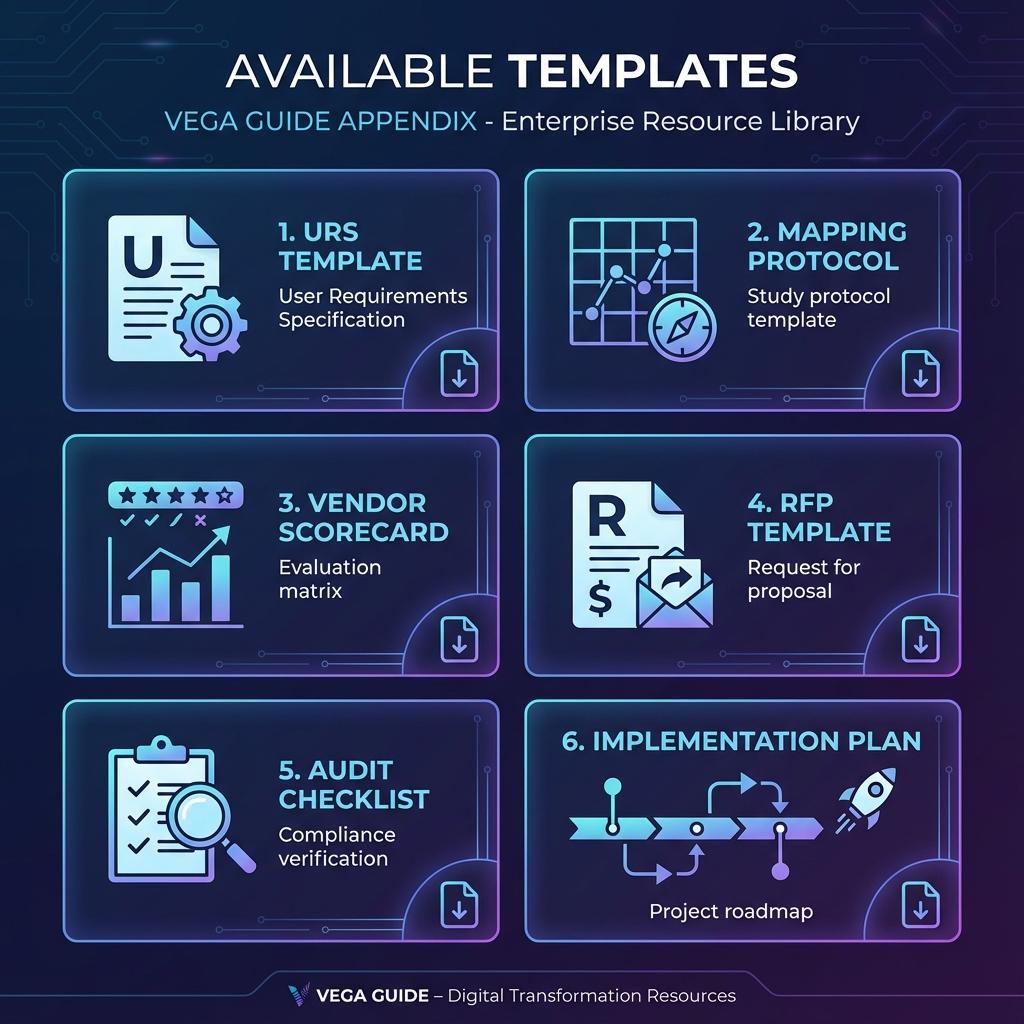
A. URS Template (Editable)
Purpose: This is a vendor-agnostic, editable URS skeleton for temperature mapping & monitoring systems across pharma, food, logistics, and data centres. Usage: Treat everything in {curly braces} or [square brackets] as fields for you to fill or adapt.
A.1 Document Control
| Field | Entry |
|---|---|
| Document Title | User Requirement Specification – Temperature Mapping & Monitoring System |
| Document ID / Version | [URS-TMMS-XXX / vX.X] |
| Prepared By | [Name, Function] |
| Reviewed By | [Name(s), Function(s)] |
| Approved By | [QA/Quality Head Name] |
| Effective Date | [DD-MMM-YYYY] |
| Next Review Date | [DD-MMM-YYYY] |
A.2 Purpose & Scope
A.2.1 Purpose Describe why this system is being implemented.
This URS defines the business, regulatory, and technical requirements for a temperature mapping and monitoring solution covering [environments] at [sites/countries]. The system supports product quality, patient safety, food safety, uptime of critical IT infrastructure, and compliance with applicable regulations and standards.
A.2.2 Scope
- Sites in scope:
- [Site 1, Country]
- [Site 2, Country]
- Environments in scope:
- Warehouses & distribution hubs
- Cold rooms & freezers
- Stability chambers / incubators
- Transport assets (reefers, trucks, passive shippers, containers)
- Retail refrigerated cabinets
- Data centres, server rooms, edge computing rooms
A.3 Applicable Regulations, Standards & Policies
List what governs your requirements (no need to be exhaustive here; you’ll cross-link in Appendix E).
- [Company] Quality Management System
- [Company] Data Integrity Policy
- [Company] Calibration & Metrology Policy
- Applicable GxP/GDP/GMP/GSP guidelines
- Applicable food safety / HACCP regulations
- Applicable data centre / IT standards & security policies
A.4 Functional Requirements
Use tables per area for clarity.
A.4.1 Measurement Performance
| Requirement ID | Requirement Description | Priority (M / S) | Comments / Rationale |
|---|---|---|---|
| M-01 | System shall support temperature measurement from [min °C] to [max °C]. | M | Cover all intended environments. |
| M-02 | For critical environments, accuracy shall be ≤ [±0.5 °C] over range [X–Y °C]. | M | Define per risk level. |
| M-03 | Resolution shall be at least [0.1 °C]. | M | |
| M-04 | Sampling interval shall be configurable between [1–15] minutes. | M | |
| M-05 | System shall support humidity measurement where required ([Yes/No]; specify ranges). | S |
(M = Mandatory, S = “Should”/Strongly recommended)
A.4.2 Mapping & Monitoring
| Req ID | Requirement Description | Priority |
|---|---|---|
| MAP-01 | System and/or service provider shall support design and documentation of temperature mapping studies for all in-scope environments. | M |
| MAP-02 | Mapping outputs shall identify hot/cold spots and recommend final probe locations and alarm setpoints. | M |
| MON-01 | System shall support continuous monitoring of all defined critical points with real-time data acquisition. | M |
| MON-02 | System shall support alarm limits (low, high, optional low-low, high-high) per channel. | M |
| MON-03 | System shall support alarm delays, escalation rules, and acknowledgement workflows. | M |
A.5 Data Integrity & Security Requirements
A.5.1 User Management & Access Control
| Req ID | Requirement Description | Priority |
|---|---|---|
| DI-01 | System shall enforce unique user IDs; shared accounts shall not be used for GxP / risk-relevant activities. | M |
| DI-02 | Role-based access control shall restrict access to configuration, calibration, and critical functions. | M |
| DI-03 | Password and authentication controls shall align with [Company IT Security Policy]. | M |
A.5.2 Audit Trails & E-Signatures
| Req ID | Requirement Description | Priority |
|---|---|---|
| DI-04 | System shall maintain secure, computer-generated, time-stamped audit trails for all configuration and data changes. | M |
| DI-05 | Audit trail records shall capture user ID, date/time, old value, new value, and reason/comment where applicable. | M |
| DI-06 | Where electronic signatures are used, they shall be unique to the individual and linked to the signed record and action. | S |
A.5.3 Time, Backup & Retention
| Req ID | Requirement Description | Priority |
|---|---|---|
| DI-07 | All entries shall be time-stamped using a controlled time source and support time zone configuration. | M |
| DI-08 | System shall support scheduled backups of data and configuration and documented restore procedures. | M |
| DI-09 | Data shall remain retrievable, readable, and intact for at least [X years] or as per regulatory requirements, whichever is higher. | M |
A.6 Calibration & Metrology Requirements
| Req ID | Requirement Description | Priority |
|---|---|---|
| CAL-01 | Sensors/loggers shall be calibrated against traceable standards at intervals defined by [Company Calibration Policy]. | M |
| CAL-02 | Calibration certificates shall include “as-found” and “as-left” data, measurement uncertainty, and traceability details. | M |
| CAL-03 | System shall allow recording or linking of calibration status and due dates for all devices. | M |
| CAL-04 | System and processes shall support impact assessment for out-of-tolerance “as-found” results. | M |
A.7 Integration & IT Requirements
| Req ID | Requirement Description | Priority |
|---|---|---|
| IT-01 | System shall provide documented APIs (e.g. REST/JSON) for data access and integration with BMS, DCIM, ERP, WMS, QMS. | M |
| IT-02 | System shall support deployment model(s): [on-prem / cloud / hybrid] as approved by [IT]. | M |
| IT-03 | System shall comply with [Company Information Security Policy] including encryption, hardening and logging. | M |
A.8 Validation & Lifecycle Requirements
| Req ID | Requirement Description | Priority |
|---|---|---|
| VAL-01 | Supplier shall provide documentation and guidance to support risk-based validation (IQ/OQ/PQ & CSV or equivalent). | M |
| VAL-02 | System shall support controlled change management, with configuration changes logged and reversible where practical. | M |
| VAL-03 | Supplier shall provide release notes and impact assessments for system updates. | M |
A.9 Reporting & Usability Requirements
| Req ID | Requirement Description | Priority |
|---|---|---|
| REP-01 | System shall provide standard reports for excursions, alarms, environmental profiles and device status. | M |
| REP-02 | Users shall be able to export data in [CSV, PDF, other formats] for investigations and audits. | M |
| REP-03 | User interface shall support [languages/time zones] relevant to all in-scope sites. | S |
(You can append A.10 Non-Functional Requirements: performance, response time, browser support, etc., as needed.)
B. Mapping Protocol Template
Purpose: Standard template for any mapping study (warehouse, cold room, reefer, data hall, etc.).
B.1 Administrative Details
- Study Title: Temperature Mapping Study – [Environment / Site]
- Protocol ID / Version: [MAP-XXX / vX.X]
- Site: [Site Name, Country]
- Environment Type: [Warehouse / Cold Room / Freezer / Reefer / Data Hall]
- Prepared By: [Name, Function]
- Reviewed By: [Engineering / Operations / IT / DC Ops]
- Approved By: [QA / Quality Head]
- Planned Execution Window: [Dates / Season]
B.2 Objectives
Define clearly what you want to prove.
- To verify that the temperature distribution in [environment] remains within [X–Y °C] under defined operating conditions.
- To identify hot and cold spots and confirm worst-case locations.
- To confirm suitability of proposed monitoring probe locations and alarm limits.
B.3 Scope & Boundaries
- Included areas: [Racks 1–10, aisles A–F, chambers 1–3, rows of racks, entire data hall, etc.]
- Excluded areas (with rationale): [e.g. buffer rooms, corridors not used for storage, non-critical IT rooms].
- Interfaces with other systems: [BMS, DCIM, process areas].
B.4 Environment Description
Provide a narrative + diagram (attach to protocol).
- Dimensions (L × W × H)
- Layout (racks, aisles, cabinets, rows)
- Access points (doors, docks, hatches)
- Cooling / HVAC system description (location of evaporators, CRACs, AHUs)
- Known risk factors (solar load, frequent door openings, previous excursions, hot racks, etc.).
B.5 Test Conditions
- Load state: [Empty / Partially Loaded / Fully Loaded; % loading; type of load used].
- Door operations: [Frequency, duration, simulation pattern].
- Operating setpoints: [Target setpoint(s), tolerance bands].
- Season / ambient conditions: [If seasonal extremes are relevant, document planned season].
B.6 Instrumentation Plan
- Logger / sensor type(s): [Model, accuracy, calibration status].
- Sampling interval: [e.g. every 5 minutes].
- Total number of loggers: [N].
Attach a table:
| Logger ID | Calibration Due Date | Planned Location (Rack/Row/Height or Cabinet/Rack-U) | Notes |
|---|---|---|---|
| L-001 | [DD-MMM-YYYY] | [Rack A1, top, rear] | |
| … |
Attach a location map as an appendix (B.6.1).
B.7 Study Procedure
Stepwise instructions, e.g.:
- Verify all loggers are within calibration and configured with correct sampling interval.
- Place loggers at defined locations per instrumentation plan.
- Allow system to stabilise for [X hours] before recording data for evaluation.
- Operate environment in normal/defined conditions:
- Maintain setpoints at [X–Y °C].
- Perform planned door operations and load/unload cycles.
- Record any events that may impact results (power dips, door left open, equipment failures).
- After [minimum duration, e.g. 24–72 hours], stop the study and retrieve loggers.
- Download data into [approved software] and verify integrity.
B.8 Data Analysis Plan
- Data validation steps (check completeness, time-stamps, calibration validity).
- Statistical analysis to be performed:
- Min, max, average, standard deviation per point.
- Time outside specification per point.
- Time to recover after disturbances (door opening, power interruption).
- Hot/cold spot identification criteria.
- Comparison across sectors/racks/rows or racks/cabinets.
B.9 Acceptance Criteria
Define clearly:
- Primary criteria:
- At least [X]% of recorded values at each position must be within [target range ± tolerance].
- Secondary criteria:
- No sustained excursions beyond [Z minutes/hours].
- Recovery times after door opening/power disturbances within [N minutes].
Include fallback approach for borderline results (e.g. risk-based review, repeat study).
B.10 Deviations & Changes
- All deviations from protocol to be recorded with:
- Description, time, logger(s) affected, immediate action taken.
- Assessment of impact on study validity.
- Proposed changes requiring QA approval (e.g. repositioning of loggers mid-study).
B.11 Reporting
State that a final mapping report will be produced per template in Appendix G, including:
- Methodology summary
- Results and visualisations
- Conclusions and recommendations
- Approved probe and alarm positions
C. Audit-Readiness Checklist
Purpose: Quick, practical checklist to confirm that your mapping & monitoring system is audit-ready.
Use it as a recurring internal review tool.
C.1 Governance & Scope
- Scope of monitoring system clearly defined (sites, rooms, assets).
- URS approved by QA/Quality and linked to validation documentation.
- Supplier selection documented with rationale and scorecards.
C.2 Mapping
- Approved mapping protocols exist for each environment type.
- Mapping studies executed as per protocol, with deviations documented and assessed.
- Final mapping reports available, signed, and easily retrievable.
- Reports clearly show hot/cold spots and justify monitoring probe positions.
- Re-mapping schedule defined and followed (time- and event-based).
C.3 Monitoring System
- All in-scope environments have defined critical control points and sensors assigned.
- Monitoring system is validated (IQ/OQ/PQ completed and approved).
- Site plans with sensor IDs are up to date and accessible.
- Alarm limits and delays are documented and justified.
- Alarm notifications and escalations are tested periodically and records kept.
C.4 Data Integrity
- Unique user accounts; no shared logins.
- Role-based access control implemented and reviewed regularly.
- Audit trails enabled for all relevant data and configuration changes.
- Procedures exist for audit trail review for critical activities.
- System time synchronisation mechanism documented and verified.
C.5 Calibration & Maintenance
- Calibration policy in place, approved by QA.
- All sensors/loggers show in-calibration status; no overdue devices.
- Calibration certificates are traceable to each device, accessible for inspection.
- Out-of-tolerance “as-found” events are investigated with impact assessments documented.
- Preventive maintenance for key components (gateways, controllers, power supplies) defined and recorded.
C.6 Deviations, CAPA & Change Control
- Deviations related to mapping, monitoring, alarms, or data integrity are logged and investigated.
- CAPAs are defined, implemented, and followed up.
- System changes (software upgrades, configuration changes) go through formal change control.
- Validation impact of changes assessed and documented.
C.7 Backup, Restore & Data Retention
- Backup procedures documented and executed as per schedule.
- Periodic test restores performed and documented.
- Data retention periods defined and implemented.
- Clear procedure for data export in case of investigations, regulatory requests, or system migration.
C.8 Third Parties (3PLs, External Warehouses, Data Centres)
- Contracts/SQAs define temperature control and monitoring expectations.
- Evidence of partner mapping & monitoring available and periodically reviewed.
- Your organisation can reconstruct end-to-end temperature history for outsourced steps.
D. Vendor Evaluation Scorecard
Purpose: A refined, ready-to-use scoring matrix that aligns with Chapter 8’s pillars.
D.1 Summary Sheet Structure
Create a sheet with:
| Pillar | Weight (%) | Vendor A (Score 1–5) | B | C | | --- | --- | --- | --- | --- | | 1. Regulatory & Data Integrity Fit | 20 | | | | | 2. Mapping Methodology & Study Design | 10 | | | | | 3. Hardware Performance & Calibration | 10 | | | | | 4. Software Capabilities & UI | 15 | | | | | 5. Integration & IT Friendliness | 10 | | | | | 6. Scalability (Multi-Site, Multi-User) | 8 | | | | | 7. Services & Support | 10 | | | | | 8. Decision Governance Alignment | 7 | | | | | 9. Total Cost of Ownership (3–5 Years) | 10 | | | | | Total Weighted Score (1–5) | 100 | | | |
Scoring: 1 = Unacceptable; 5 = Excellent. Weightings can be adjusted by your governance team.
D.2 Sub-Criterion Sheet (Example for Pillar 1)
You can add a detail tab per pillar:
Pillar 1 – Regulatory & Data Integrity Fit (Weight 20%)
| Sub-Criterion | Weight within Pillar (%) | Vendor A (Score 1–5) | B | C | Notes | | --- | --- | --- | --- | --- | --- | | Audit Trails (granularity & immutability) | 40 | | | | | | User Management & Roles | 20 | | | | | | E-Signatures / Review Workflows | 15 | | | | | | Data Retention & Export | 15 | | | | | | Supplier Understanding of GxP / HACCP / GDP | 10 | | | | |
You can replicate similar tables for other pillars (mapping expertise, IT fit, etc.).
E. CFR / GDP / WHO / HACCP Mapping Requirements Table
Purpose: A working table where you map key regulation/standard families to your internal expectations for mapping & monitoring. Note: This is a structure; you will populate exact clause numbers and excerpts internally.
| Reference Family | Example Documents / Sources | Environments Emphasised | Mapping Expectations (High-Level) | Monitoring / Record Expectations (High-Level) | Internal Interpretation / Notes |
|---|---|---|---|---|---|
| US – cGMP / CFR | 21 CFR Parts 210/211; 21 CFR Part 11 | Pharma storage & manufacturing | Qualification of storage; risk-based mapping | Continuous monitoring, documented controls | [Fill in clause refs] |
| US – FSMA | FSMA rules (incl. Sanitary Transport, Traceability) | Food cold chain & transport | Validation of controls, route risk assessment | Temperature records, traceability, investigations | [Fill in] |
| EU – GDP / GMP | EU GDP Guidelines; EU GMP; Annex 11 | Medicinal product storage & distribution | Mapping of warehouses, cold rooms, etc. | Continuous monitoring, alarmed systems, data integrity | [Fill in] |
| WHO – Storage & Distribution | WHO TRS annexes on GSDP, vaccine cold chain | Global medicine / vaccine supply | Mapping of storage; lane & route profiling | Temperature logging, documented deviations | [Fill in] |
| HACCP / Food Safety | Codex HACCP, national food safety laws | Food processing & cold chain | Risk-based mapping of storage and sensitive steps | Monitoring of CCPs, trend records, audits | [Fill in] |
| Data Centres & IT | ASHRAE guidelines, Uptime Institute recommendations | Data halls, server rooms, white space | Thermal mapping and validation of hot/cold aisles | Continuous environmental monitoring, alarmed | [Fill in] |
(You can add columns for “Exact Clause ID” and “Link to Document” when you compile your internal master.)
F. Data Logger Calibration Frequency Table
Purpose: Template to set and review calibration intervals. Note: Intervals must always be risk-based and consistent with your metrology policy.
| Device Type | Application / Criticality Level | Suggested Starting Interval* | Owner (QA / Metrology / Eng) | Notes (risk-based justifications, history) |
|---|---|---|---|---|
| Fixed temp probe in freezer | High – GxP / critical product storage | [12 months] | [Metrology] | Example: may tighten to 6–9 months if drift observed. |
| Warehouse air logger | Medium – GxP / buffer warehouse | [12–24 months] | [Metrology] | Adjust based on stability and OOT findings. |
| Transport data logger | High – cold chain shipments (pharma/food) | [12 months] | [Metrology / Logistics] | Consider pre- and post-use checks. |
| Retail cabinet logger | Medium – food retail | [12–24 months] | [QA / Maintenance] | Depends on local regulations and risk. |
| Data hall environment sensor | High – uptime-critical data centre | [12 months] | [DC Ops / Metrology] | Consider manufacturer recommendations. |
- Intervals above are illustrative starting points; they must be set, justified, and periodically reviewed by your internal calibration policy owners.
You can expand with columns like:
- “Historical Stability (Yes/No)”
- “Last OOT Event Date”
- “Interval Change (Shortened/Extended)”
G. Sample Mapping Report Outline
Purpose: Standard, audit-ready structure for any temperature mapping report.
-
Title Page
- Report Title (e.g., Temperature Mapping Report – [Environment / Site])
- Report ID / Version
- Site / Location
- Prepared by, Reviewed by, Approved by
- Dates of study execution
-
Document History
- Revision table listing versions, changes, and approvals.
-
Executive Summary
- Short narrative:
- Objective
- Key findings (pass/fail)
- Identified hot/cold spots
- Key recommendations
- Short narrative:
-
Background & Scope
- Description of environment and purpose (e.g., storage of [product types]).
- Scope boundaries: included/excluded areas.
-
Applicable Standards & Requirements
- Internal and external guidelines that motivated the mapping.
-
Environment Description
- Physical layout (dimensions, racks, aisles, cabinets, doors).
- Cooling / HVAC / refrigeration configuration.
- Operational patterns (door openings, loading, process flows).
-
Instrumentation & Equipment
- Logger/sensor types and specifications.
- Calibration status summary (table).
- Asset list linking device IDs to calibration certificates.
-
Study Design & Methodology
- Test conditions (load, doors, setpoints, season).
- Sampling interval, study duration.
- Logger placement rationale (with diagrams).
- Any pre-conditioning / stabilisation period.
-
Execution Summary
- Actual dates/time of start and end.
- Deviations or unexpected events during the study.
- Any changes to planned conditions (with justification).
-
Results
10.1 Data Quality Checks
- Completeness, time synchronisation, anomalous points.
10.2 Statistical Results (Per Logger / Zone)
- Tables of min, max, mean, standard deviation, time in range.
10.3 Spatial Analysis
- Identification of hot and cold spots.
- Comparison between levels, aisles, racks, cabinets, etc.
10.4 Event Response Analysis
- Behaviour during door openings, power dips, defrost cycles, etc.
- Recovery times and temperature overshoots.
10.5 Visualisations
- Trend graphs.
- Heatmaps / contour plots (where useful).
-
Discussion
- Interpretation of results versus acceptance criteria.
- Consideration of worst-case conditions.
- Assessment of variability and risk.
-
Conclusions & Recommendations
- Overall conclusion (environment suitable / not suitable for intended use).
- Recommended monitoring probe positions.
- Recommended alarm limits (with rationale).
- Recommended process / layout changes, if any.
- Need and timing for repeat mapping (if applicable).
-
Approval & Sign-Off
- Names, roles, dates for preparer, reviewer(s), and approver(s).
-
Appendices
- A: Layout diagrams and sensor locations.
- B: Full data tables or selected extracts.
- C: Calibration certificates or summary.
- D: Deviation log and CAPA summary.
H. Glossary of Acronyms & Regulatory References
Purpose: Make the guide readable for busy stakeholders who don’t live in acronyms all day.
H.1 General & Quality
- ALCOA+ – Attributable, Legible, Contemporaneous, Original, Accurate, plus Complete, Consistent, Enduring, and Available.
- CAPA – Corrective and Preventive Action.
- cGMP – Current Good Manufacturing Practice.
- GDP – Good Distribution Practice (primarily for medicinal products).
- GMP – Good Manufacturing Practice.
- GSP – Good Storage Practice.
- GxP – Collective term for good practice quality guidelines (GMP, GDP, GCP, etc.).
- QMS – Quality Management System.
- SOP – Standard Operating Procedure.
- URS – User Requirement Specification.
H.2 Validation & Systems
- DQ – Design Qualification.
- IQ – Installation Qualification.
- OQ – Operational Qualification.
- PQ – Performance Qualification.
- CSV – Computer System Validation.
- CSA – Computer Software Assurance (risk-based approach to validating software).
H.3 Measurement & Metrology
- RTD – Resistance Temperature Detector.
- Thermistor – Temperature-sensitive resistor used as a sensor.
- Thermocouple – Temperature sensor based on junction of two dissimilar metals.
- ISO/IEC 17025 – International standard for competence of testing and calibration laboratories.
H.4 Food & Cold Chain
- FSMA – Food Safety Modernization Act (US).
- HACCP – Hazard Analysis and Critical Control Points.
- CCP – Critical Control Point (in HACCP).
- 3PL – Third-Party Logistics Provider.
H.5 Pharma, Biotech & Health
- API – Active Pharmaceutical Ingredient.
- ICH – International Council for Harmonisation of Technical Requirements for Pharmaceuticals for Human Use.
- MHRA – Medicines and Healthcare products Regulatory Agency (UK).
- EMA – European Medicines Agency.
- WHO TRS – World Health Organization Technical Report Series.
H.6 Data Centres & IT / OT
- ASHRAE – American Society of Heating, Refrigerating and Air-Conditioning Engineers.
- DCIM – Data Centre Infrastructure Management.
- BMS – Building Management System.
- OT – Operational Technology (industrial control systems, etc.).
- IT – Information Technology (enterprise computing).
- LPWAN – Low Power Wide Area Network.