🔮 Chapter 10: Future-Proofing to 2026 and Beyond
By the time you start evaluating temperature mapping & monitoring systems today, you’re not just buying for current compliance—you’re buying for a world where:
- Audits are largely digital.
- Traceability is near real-time.
- Data centres, factories, warehouses, and logistics fleets are all monitored and analysed as one ecosystem.
This chapter helps you think two steps ahead so you don’t end up re-platforming in 3 years because the world moved and your system didn’t.
10.1 Regulatory Shifts on the Horizon
The big picture: regulators are not suddenly inventing entirely new principles. They’re doing three things:
- Tightening expectations around evidence – especially digital records and auditability.
- Extending control deeper into the supply & cold chain.
- Modernising GxP / GDP frameworks to match digital reality.
10.1.1 Digital Audit Expectations
Trend: Audits are shifting from “show me your filing cabinets” to “show me your system, your data, and your audit trails”.
Key drivers:
- WHO continues to emphasise mapping, monitoring and documentation for time- and temperature-sensitive products, including detailed supplements on monitoring systems, mapping of storage areas, and route profiling.
- Regulators and notified bodies are increasingly comfortable reviewing electronic data extracts, filtered alarm histories, and digital CAPA evidence rather than static paper reports.
- Data integrity guidance from agencies like FDA, EMA, MHRA keeps reinforcing ALCOA+ expectations: attributable, legible, contemporaneous, original, accurate—and also complete, consistent, enduring, and available.
What this means for your buyer criteria:
- Your system must natively support audits:
- Time-stamped, user-attributed audit trails for configuration, set-point changes, alarm acknowledgements, and data exports.
- Fast, filterable access to years of history without heroic IT interventions.
- Clear linkages between events (excursions), actions (alarm response, investigations), and decisions (CAPA, risk assessment).
- “We can export CSV and you can manage the rest in Excel” is not digital audit readiness.
Future-proof move: assume that remote / hybrid audits will be standard by 2026, and specify your URS accordingly.
10.1.2 GxP Modernisation & Risk-Based Validation
Validation is shifting from document-heavy box-ticking to risk-based assurance of computerised systems.
- FDA’s move toward Computer Software Assurance (CSA) for production and quality system software stresses a risk-based approach to validation activities—more critical thinking, less blind test script inflation.
- This doesn’t replace core CSV principles; it refines them so that validation effort is proportional to risk and impact.
Implications for temperature monitoring platforms:
-
Vendors must be able to support risk-based validation packages:
- Clear description of intended use and risk impact.
- Configurable features documented so you can decide what needs testing vs what can be justified by supplier documentation.
- Standard validation accelerators (e.g., template IQ/OQ documents, configuration specs, traceability matrices).
-
Expect more questions from auditors such as:
“How did you decide which parts of the system required rigorous testing, and which relied on vendor documentation?”
Future-proof move: choose vendors who understand CSA-style thinking and are comfortable talking about risk, not only about “we’ll give you a giant validation binder”.
10.1.3 FSMA Full Traceability & Enforcement (Food & Cold Chain)
In the food world, FSMA Rule 204 (Food Traceability) is the big digital inflection point.
- The FDA’s Food Traceability Final Rule requires covered entities to maintain and share traceability records for certain high-risk foods along the supply chain.
- The original compliance date was 20 January 2026; in 2025, FDA proposed extending it by 30 months to 20 July 2028, while keeping the requirements intact.
Practically, this means:
- Cold chain players (manufacturers, processors, 3PLs, retailers) must be able to link temperature control evidence to traceability events—lot codes, shipping events, receiving, transformations.
- Manual, disjointed temperature logs will be increasingly hard to reconcile with digital traceability chains.
Future-proof move: even if you’re not directly under FSMA 204 today, design your monitoring to associate temperature data with lots, lanes, and events. It will make your life easier for both regulations and customer expectations.
10.1.4 GDP Revisions and WHO Expectations
On the pharma side, regulators are tightening GDP and GxP expectations around distribution, cold chain, and data handling:
- WHO’s more recent guidance on good storage and distribution practices for medical products (TRS 1025 Annex 7) and related annexes continue to highlight:
- Qualification of storage and transport.
- Temperature mapping of storage areas.
- Monitoring systems and route profiling for transport.
- Industry observers and GDP-focused journals report ongoing GDP updates and enforcement focus across EU and other regions—particularly around digital records, outsourced logistics, and data integrity in distribution.
What this means for your roadmap:
- Expect more probing questions about:
- How often you re-map storage and transport assets.
- How mapping findings drive sensor positions and alarm limits.
- How you manage data flows when using third-party logistics providers.
- If you rely on 3PLs or external warehouses, the expectation by 2026 is that you can still show an end-to-end control narrative, not shrug and say “our 3PL handles that”.
Future-proof move: build contracts, URS, and SLAs that extend your mapping & monitoring expectations into partner networks.
10.2 Technology Trends
The technology stack is evolving fast—but the principles remain:
- Measure correctly.
- Capture and protect data.
- Turn signals into timely, defensible decisions.
The trends below are useful only if they reinforce those fundamentals.
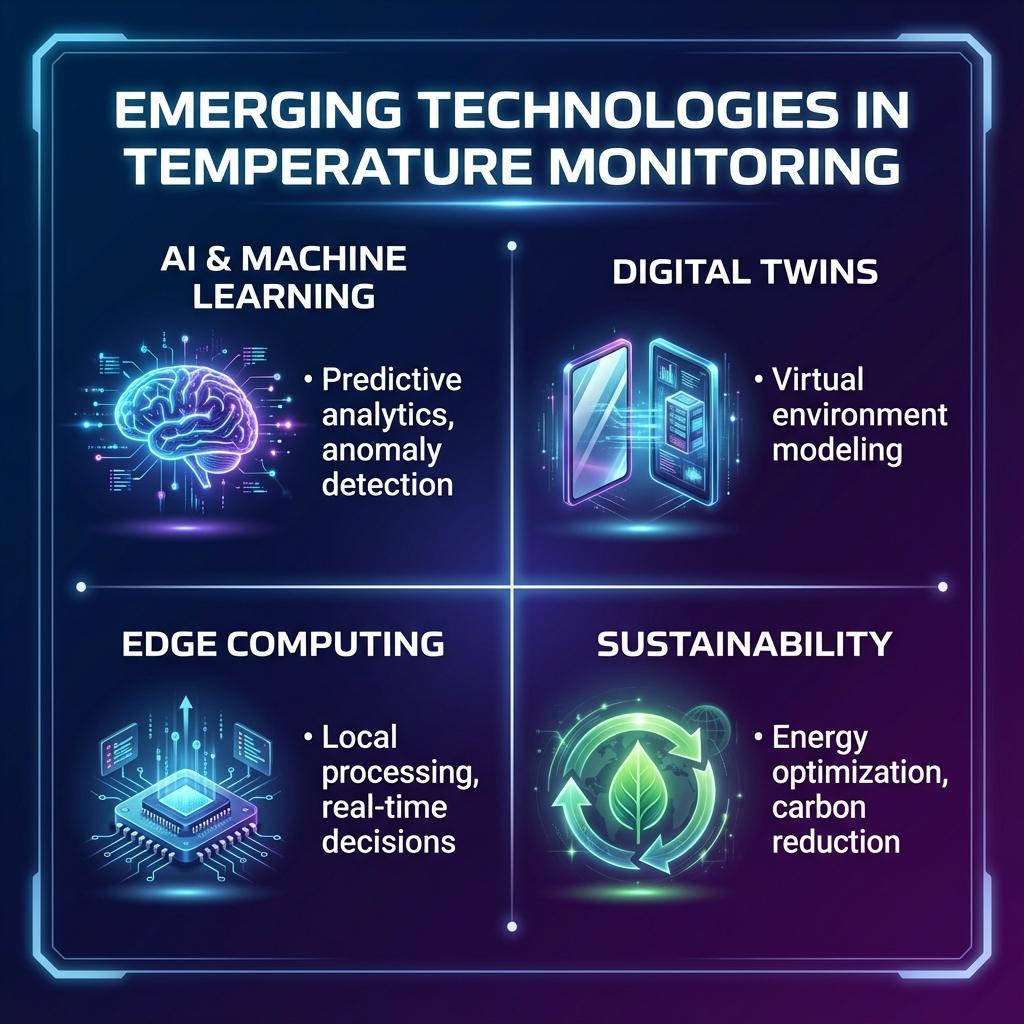
10.2.1 AI-Based Anomaly Detection
What’s happening
- As organisations scale to hundreds of sites, sensors, and routes, manual threshold-only alarm logic becomes noisy and unmanageable.
- AI/ML models are increasingly used to:
- Detect subtle drifts before they breach limits.
- Identify pattern anomalies (e.g., repeated small excursions at the same time each day).
- Classify events by likely root cause (door behaviour, refrigeration performance, loading patterns, airflow issues, etc.).
Where this is valuable
- High-volume cold chains (food and pharma) where minor deviations may signal upcoming equipment failure or process drift.
- Data centres where thermal behaviour is complex and small anomalies can precede outages.
Caveats in regulated settings
- AI outputs must be treated as decision support, not a black-box replacement for defined limits.
- You will need:
- Explainability – enough transparency to justify why the system flagged an anomaly.
- Documented model governance (training data, versioning, performance checks).
Future-proof move: in your URS, treat AI/analytics capabilities as “augment” features—powerful, but always anchored to validated data and conventional limits.
10.2.2 Multi-Site Integration & Central Dashboards
The most sophisticated organisations are moving from site-by-site monitoring to portfolio-level visibility:
- Pharma groups monitoring warehouses, cold rooms, and in-transit conditions across continents.
- Frozen food brands overseeing third-party warehouses and 3PL fleets under a single umbrella.
- Data centre operators managing edge sites, enterprise rooms, and co-location spaces from a central NOC.
Technology trends:
- Mature multi-tenant, multi-site architectures in cloud or hybrid setups.
- Role-based dashboards showing:
- Global risk heatmaps.
- Regional performance comparisons.
- Drill-down capability into specific rooms, racks, or vehicles.
Future-proof move: ensure your chosen platform can scale from “one site” to “global portfolio” without re-platforming—architect for multi-site from day 1, even if you start small.
10.2.3 IoT & LPWAN Adoption in Remote and Difficult Environments
Not all temperature-controlled environments sit inside a tidy building with perfect Wi-Fi.
Where IoT/LPWAN really helps
- Remote warehouses or depots with limited infrastructure.
- Agricultural or aquaculture cold storage near production sites.
- Long-haul transport where cellular connectivity is intermittent.
- Harsh environments where wired infrastructure is impractical.
Technologies in play:
- LPWAN networks (e.g., LoRaWAN, NB-IoT) enabling long-range, low-power sensor networks.
- Battery-powered sensors with multi-year life and store-and-forward capability.
- Cloud platforms ingesting data via gateways and synchronising when connectivity returns.
Future-proof move:
- Ensure your solution supports hybrid connectivity (wired, Wi-Fi, LPWAN, cellular, satellite if needed).
- Explicitly test offline behaviour and data integrity on reconnect.
- Make sure your data model can cope with delayed events without corrupting time-series analysis.
10.2.4 Smart Containers & Dynamic Route Mapping
Cold chain and high-value logistics are moving toward instrumented assets and dynamic routing:
- Smart reefers and containers with built-in sensors, GPS, and communications.
- Lane and route profiles that integrate historical excursions, dwell times, and ambient conditions.
- Algorithms that suggest alternative routes, hub choices, or container types based on risk.
Implications for buyers:
- Your monitoring platform should be able to associate data with journeys, lanes, and assets, not just devices.
- Over time, lane-by-lane data enables:
- Sharper supplier/3PL performance reviews.
- Smarter route design with reduced excursion risk.
- Stronger evidence in disputes or investigations.
Future-proof move: specify that transport monitoring data must be linked to shipments and routes in a way that’s queryable and exportable—this will play nicely with FSMA-style traceability and customer audits.
10.2.5 OT/IT Convergence Risks in Pharma & Data Centres
Sensors and controllers that used to live on isolated networks are now being integrated with:
- Enterprise IT networks.
- Cloud platforms.
- Global dashboards and remote access tools.
This is great for visibility—and a gift to attackers if done badly.
Key frameworks & trends:
- IEC/ISA 62443 series has emerged as the de-facto reference for cybersecurity of industrial automation and control systems, advocating risk-based, defence-in-depth security for OT.
- Smart data centres and Industry 4.0 facilities are actively segmenting networks into zones and conduits, with strict control over how OT segments talk to IT segments.
What this means for temperature monitoring:
- Any solution that sits across chillers, AHUs, refrigeration controls, PLCs, BMS, DCIM, and cloud must be designed as part of your OT security architecture, not as a casual add-on.
- By 2026, expect auditors and security teams to ask:
- How is monitoring network traffic segmented from business traffic?
- What is your patching, hardening, and access control model for monitoring systems?
- How do you manage remote access for vendors?
Future-proof move:
- Treat temperature monitoring as critical OT, not just “some sensors”.
- Align procurement and design decisions with IEC 62443-style principles—zones, conduits, and defence in depth.
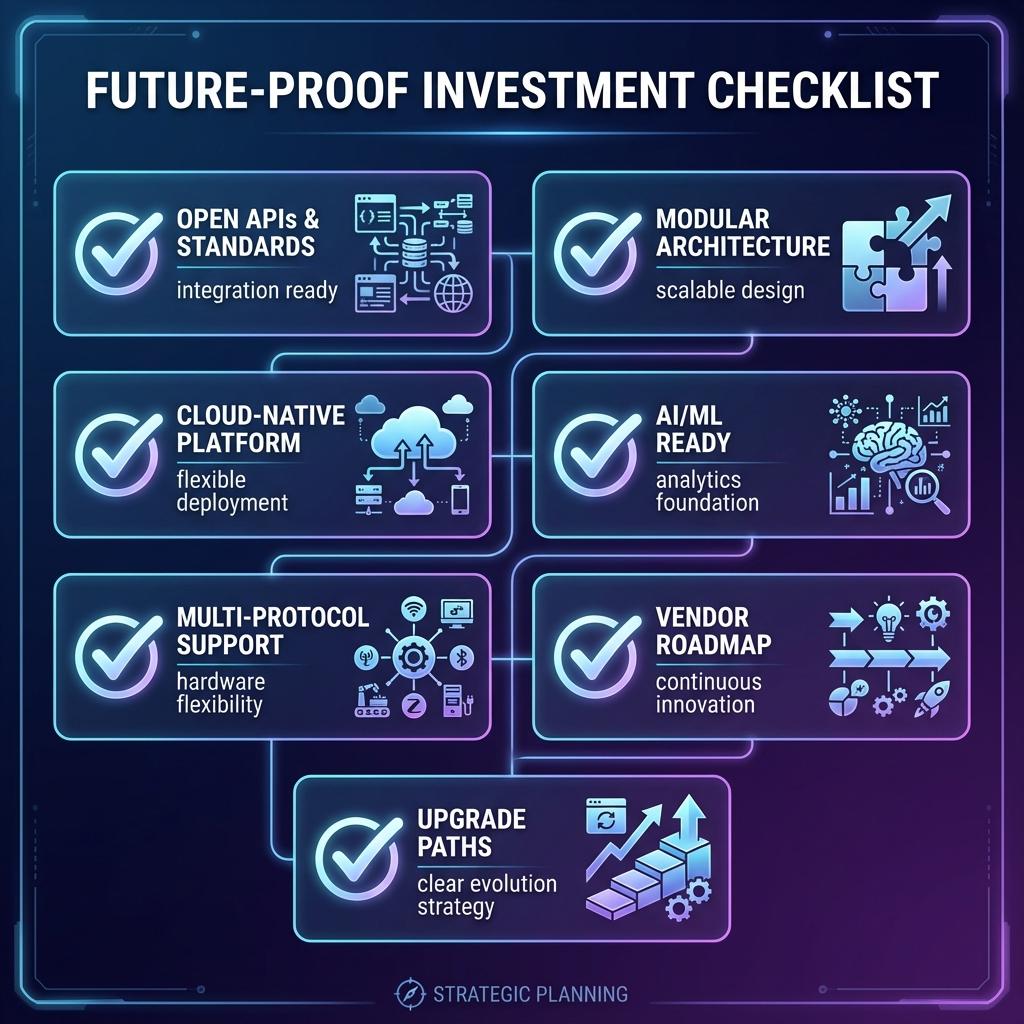
10.3 Practical Future-Proofing Checklist
To close this guide, here’s a concise checklist you can apply to any temperature mapping & monitoring project to keep it relevant to 2026 and beyond.
10.3.1 Regulatory & Governance
- Our URS explicitly accounts for digital audits (audit trails, data exports, remote review).
- We understand how FSMA-style traceability and GDP expectations may affect our cold chain architecture, even if not fully in scope today.
- Our validation approach is risk-based, aligned to emerging CSA thinking (where applicable), not just template-driven.
- Quality & Compliance retain formal decision authority on vendor acceptability.
10.3.2 Architecture & Technology
- The platform supports multi-site, multi-environment scaling without re-platforming.
- Connectivity combines wired + wireless + LPWAN/cellular options appropriate to our geography and asset mix.
- Data centres and OT environments are designed under a cybersecurity framework (IEC 62443 or equivalent) with clear segmentation.
- AI/analytics features are treated as decision support with clear governance, not as opaque black boxes.
10.3.3 Data & Interoperability
- We have API-level access to our data and configurations (no vendor lock-in by obscurity).
- The system can associate data with lots, SKUs, routes, assets, racks, and rooms, not just devices.
- We have tested backup and export processes as part of validation, including vendor-exit scenarios.
If you embed these future-proofing principles into your specifications and decisions, you won’t just be “compliant for now”.
You’ll be the organisation that auditors quietly use as a benchmark, vendors see as a serious buyer, and internal stakeholders trust when you say:
“Yes, our temperature mapping & monitoring is under control—
and it’s ready for where the world is going, not just where it’s been.”
Future-Proofing Strategy
This flowchart shows how to evaluate and incorporate emerging technologies: